zoom_in Drag to zoom
Due Process of Law
$0.00 / unit
Due Process of Law
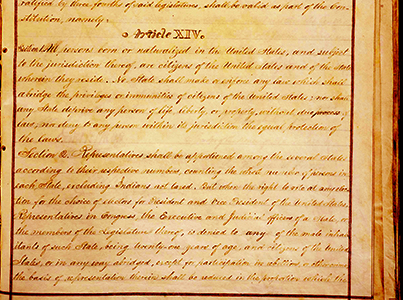
The Fourteenth Amendment to the Constitution of the United States, adopted in 1868, binds the States to the same command that the Fifth Amendment imposes on the Federal Government, that they not “deprive any person of life, liberty or property without due process of law.” Cryptic though this clause is, it has proven over time to be one of the most consequential provisions of the Constitution, and one of the most controversial. Since 1868 judges, scholars, and citizens have disagreed over whether the clause merely requires that the States employ proper formal procedures before they may take a person’s life, liberty, or property, or whether the clause points to rights relating to justice and fair treatment of individuals that prohibit the States from adopting certain kinds of legislation, and, if the latter, what these extra-Constitutional rights might be and where they originate. The course explores these questions and their history in the American courts since 1868. We will examine some key opinions issued by the United States Supreme Court that have elaborated on and changed the meaning of the Due Process Clause. The course will be conducted as a seminar, giving the participants the maximum opportunity to exchange and debate ideas. Casebook summaries of cases and analyses of the key legal issues they entail will be provided in preparation for each class meeting, and you are of course welcome to dig deeper, if you wish. We will wrap up with a look at Roe v. Wade (1973) and the recent Dobbs decision.
Instructor: Richard Adelstein
Location: Wesleyan Wasch Center
Dates: Tuesdays 5:00-6:30 pm, March 28, April 4, 11, 18, 25