zoom_in Drag to zoom
Ancient Japan Meets the Modern World
$125.00 / unit
Ancient Japan Meets the Modern World: From isolation to globalization
For hundreds of years, feudal Japan functioned successfully under a military system of rule, with shoguns and their regional vassals controlling the country. Foreign contact was limited to Holland through Nagasaki and to Okinawa through Satsuma in Kagoshima. Through Okinawa, the Japanese also traded with China and Southeast Asia. This system of controlled contact remained largely intact until 1853, when America’s “Black Fleet” of steam-powered naval vessels under the command of Commodore Matthew Perry arrived in Edo (today’s Tokyo) Harbor, demanding the right to establish direct trade relations between Japan and the United States.
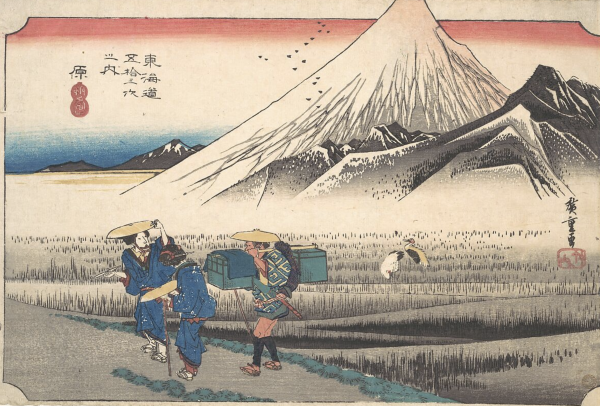
The course will begin with an introduction to religious paintings used and viewed in medieval Japan, including images of sacred landscapes and the visionary journeys they inspired. Students will learn about the historic role Zen Buddhism played in Japanese society over centuries. Then they will follow the shoguns of the past as they journey along the 230-mile Tokaido Road, following the Pacific coastline from Tokyo to Kyoto, to pay homage to the reclusive emperor.
Next they will turn to social and historical developments in Japan during the second half of the 19th century, when the nation encountered Western interests and influences after Perry returned in 1854 and Japan agreed to open its ports. This move gave rise to internal conflict that resulted in the shogunate's overthrow in 1868. During the subsequent Meiji Period (1868–1912), the young ruler for which it is named initiated sweeping changes, among them included Western cultural and educational influences, industrialization, political restructuring, and the adoption of a constitution. By the century's end Japan had emerged as a world imperial power.
The course will include a visit to the current exhibition at Yale’s Beinecke Library, “Textured Stories: The Chirimen Books of Modern Japan,” presenting crêpe-paper illustrated books for children produced between the 1880s and the 1950s.
Instructors: Richard Friswell, Prof. William Johnston, Prof. Talia Andrei, Natalie Semmel (Yale)
4 Tuesdays, March 3, 10, 24, 31, 4:30–6:30 PM; van to Yale, Tuesday, March 17, 2:00–5:00 PM